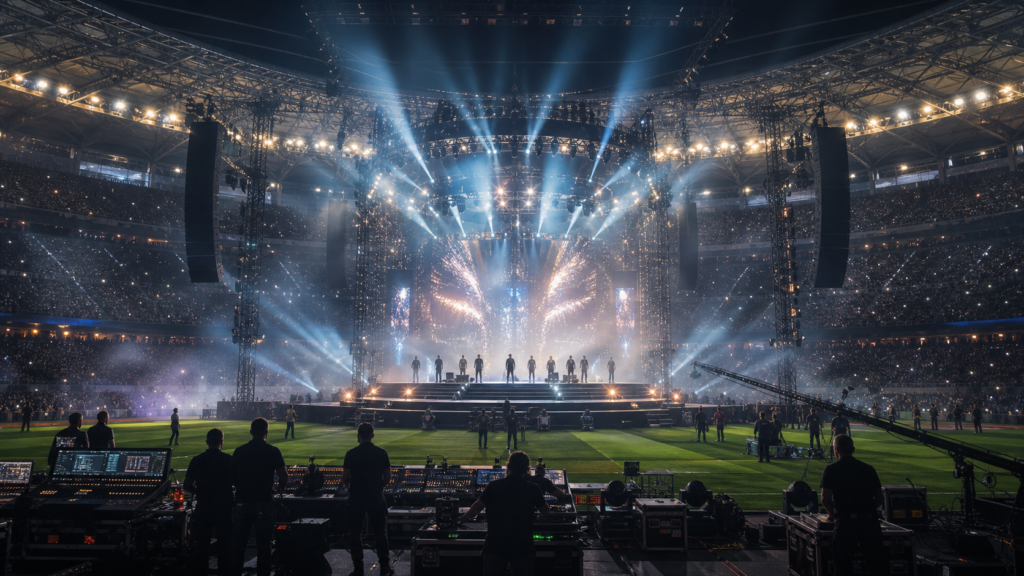
Fastgist take: Football has always been entertainment, but the modern World Cup is becoming something bigger: a sport, a concert, a broadcast product, and a global advertising platform all at once.
The growing push around a World Cup final halftime show fits a wider trend. Major sporting events are no longer sold only on the match itself. They are built as full cultural moments, with music, celebrity, sponsors, streaming clips, and social media reactions designed to travel across the world.
For traditional football fans, that can feel uncomfortable. The sport does not have the same halftime culture as American football, and many supporters want the final to remain focused on the match. That concern is fair. If the show interrupts the rhythm of the game or feels forced, it risks annoying the core audience.
But the commercial logic is obvious. A World Cup final already attracts one of the biggest global audiences in media. Adding a major entertainment layer gives organizers more sponsorship inventory, more social content, and more reasons for casual viewers to stay engaged even if they are not deeply attached to either team.
It also reflects how younger audiences consume live events. Many do not separate sport, music, fashion, and celebrity as sharply as older media models did. A star performance, a viral outfit, or a behind-the-scenes production clip can become part of the same conversation as a goal.
The challenge is balance. Football does not need to become a concert with a match attached. The spectacle should serve the event, not swallow it. The best version would make the final feel more global and celebratory without making players, fans, and the trophy feel secondary.
There are practical questions too. A large halftime production needs staging, turf protection, broadcast timing, security, rehearsal, and coordination with teams. The bigger the show becomes, the more important execution becomes. A slick show can make the final feel premium; a clumsy one can feel like clutter.
For Fastgist readers, the story sits perfectly between entertainment, sport, and money. It shows how global events are monetized today: not just through tickets and TV rights, but through moments that can be clipped, sponsored, replayed, and shared long after the whistle.
Sources: The Guardian football coverage, BBC Sport football coverage.