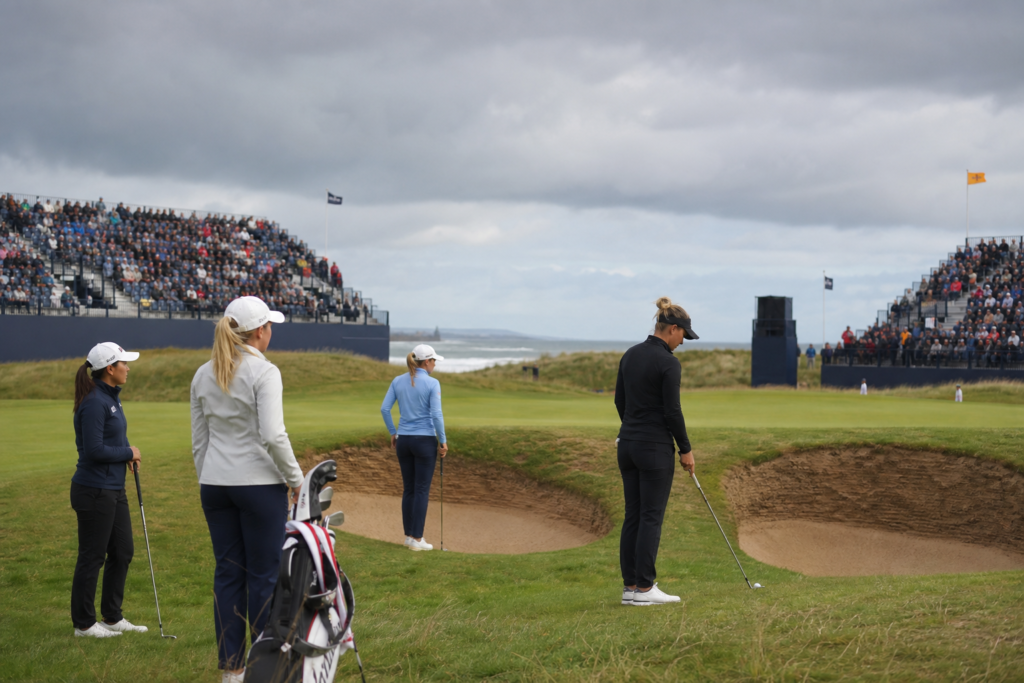
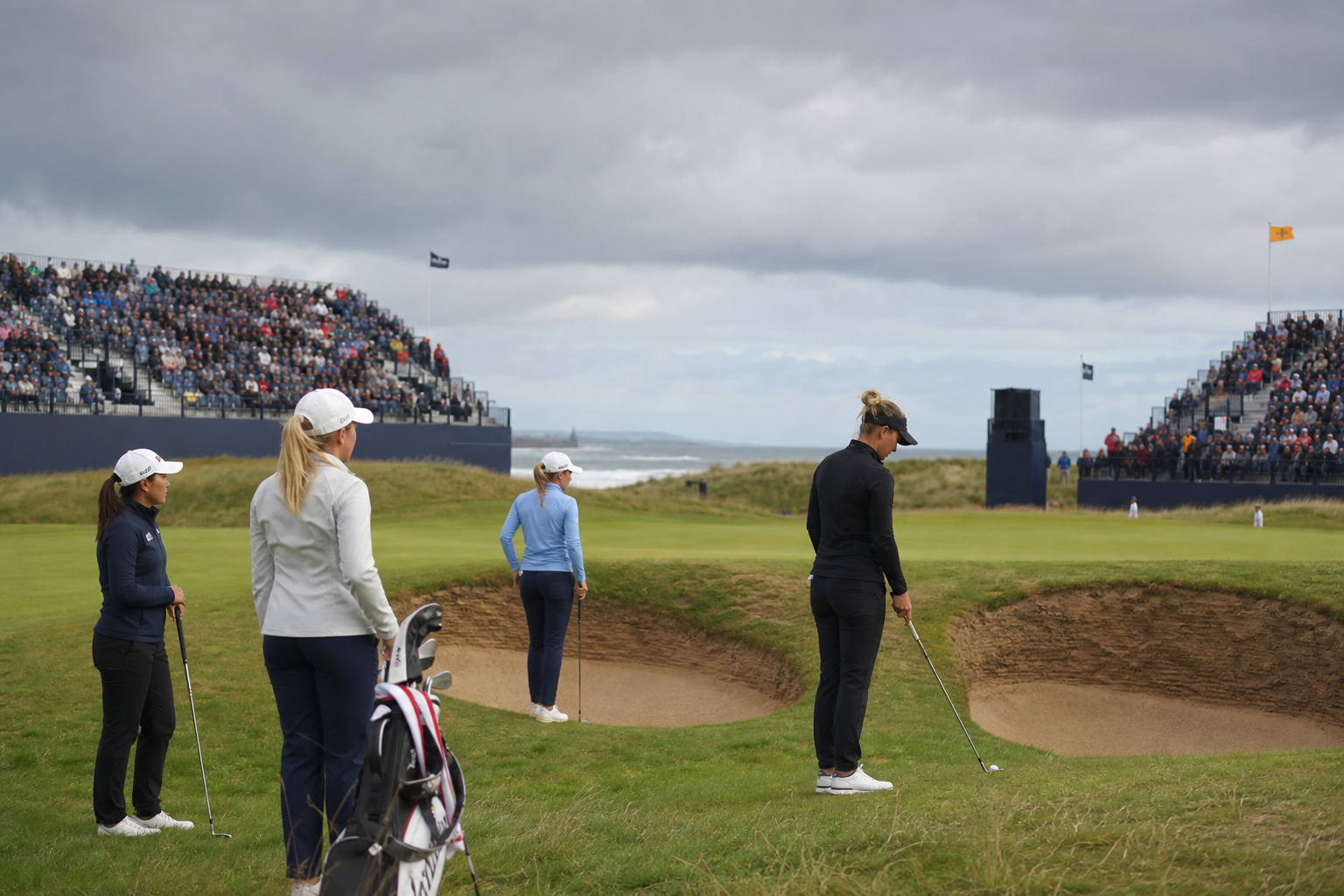
The final major championship of the women’s golf season has begun at Royal Lytham and St Annes, bringing the world’s leading players to one of the most demanding settings in the sport.
The LPGA lists the championship from July 30 to August 2 in Lancashire, England. An Associated Press tournament preview placed the prize fund at $10 million and highlighted the possibility of a player winning three majors in the same season for the first time since 2013.
Links golf changes the questions
Royal Lytham is not designed to reward power alone. Deep bunkers, firm turf, changing wind and awkward angles force players to make decisions before every shot. A drive that looks ideal in calm weather can run into trouble after one gust or an unfortunate bounce.
That uncertainty gives the championship a different rhythm from many parkland events. Players may choose lower ball flights, accept longer approach shots or aim away from flags to protect against a costly miss. Patience becomes a competitive skill.
The weather also changes the leaderboard. Early and late starters can face different conditions, making adaptability essential. The winner is likely to combine precise ball-striking with the emotional discipline to treat bad bounces as part of the course rather than personal injustice.
A truly international field
Women’s golf now draws leading contenders from North America, Europe, Asia and beyond. The field includes established major champions, rising professionals and elite amateurs, reflecting how widely the women’s game has developed.
Nelly Korda enters as a prominent favourite after an excellent season, while players such as Haeran Ryu have their own chance to define the year. Home support will follow British contenders, and defending champion Miyu Yamashita represents another strong generation of Japanese golfers.
The diversity of the field matters commercially as well as competitively. Broadcasters and sponsors can reach audiences across time zones, while young players see multiple routes into the professional game. A major championship becomes a global showcase rather than a domestic event with international guests.
Fifty years of progress and unfinished work
The championship’s history reaches back to an era when women’s professional golf received far less prize money, media attention and institutional support. Today’s purse and global distribution show meaningful progress.
Comparison with the men’s game still reveals gaps in investment and visibility. The most useful response is not to diminish what has improved but to keep building regular coverage beyond major weeks. Fans cannot form lasting relationships with athletes if their stories appear only when a trophy is awarded.
What to watch
Course management should be as important as spectacular shots. Watch how contenders respond after finding a bunker, how they control distance in crosswinds and whether they resist attacking pins that offer little margin for error.
The final major also carries season-long consequences. A victory can reshape player rankings, sponsorship opportunities and awards, while a strong performance by a newcomer can accelerate an entire career.
Royal Lytham will not identify the player with the prettiest swing in perfect conditions. It will reward the golfer who solves changing problems for four days. That combination of history, weather and global talent makes this championship one of the most compelling tests on the calendar.