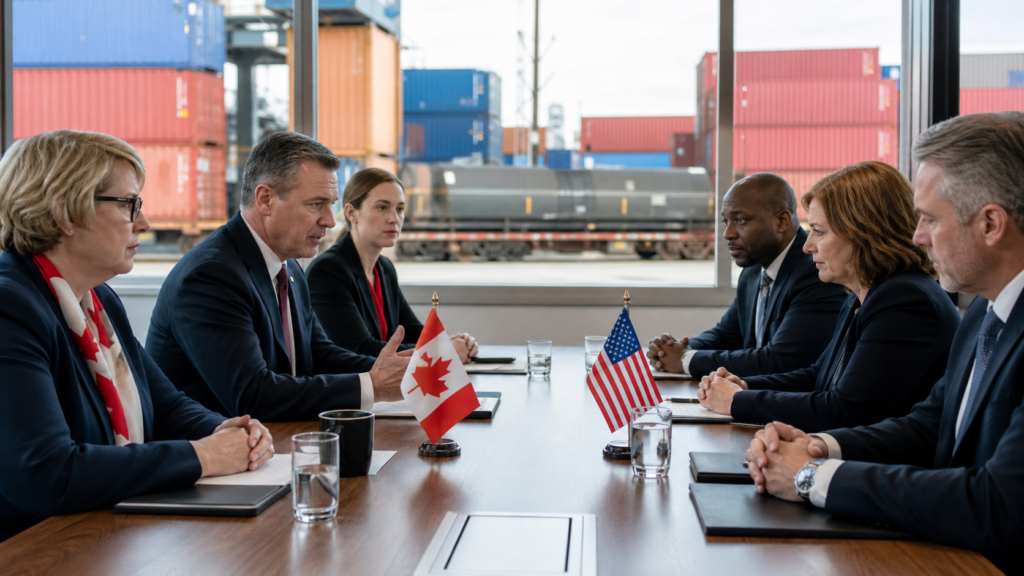
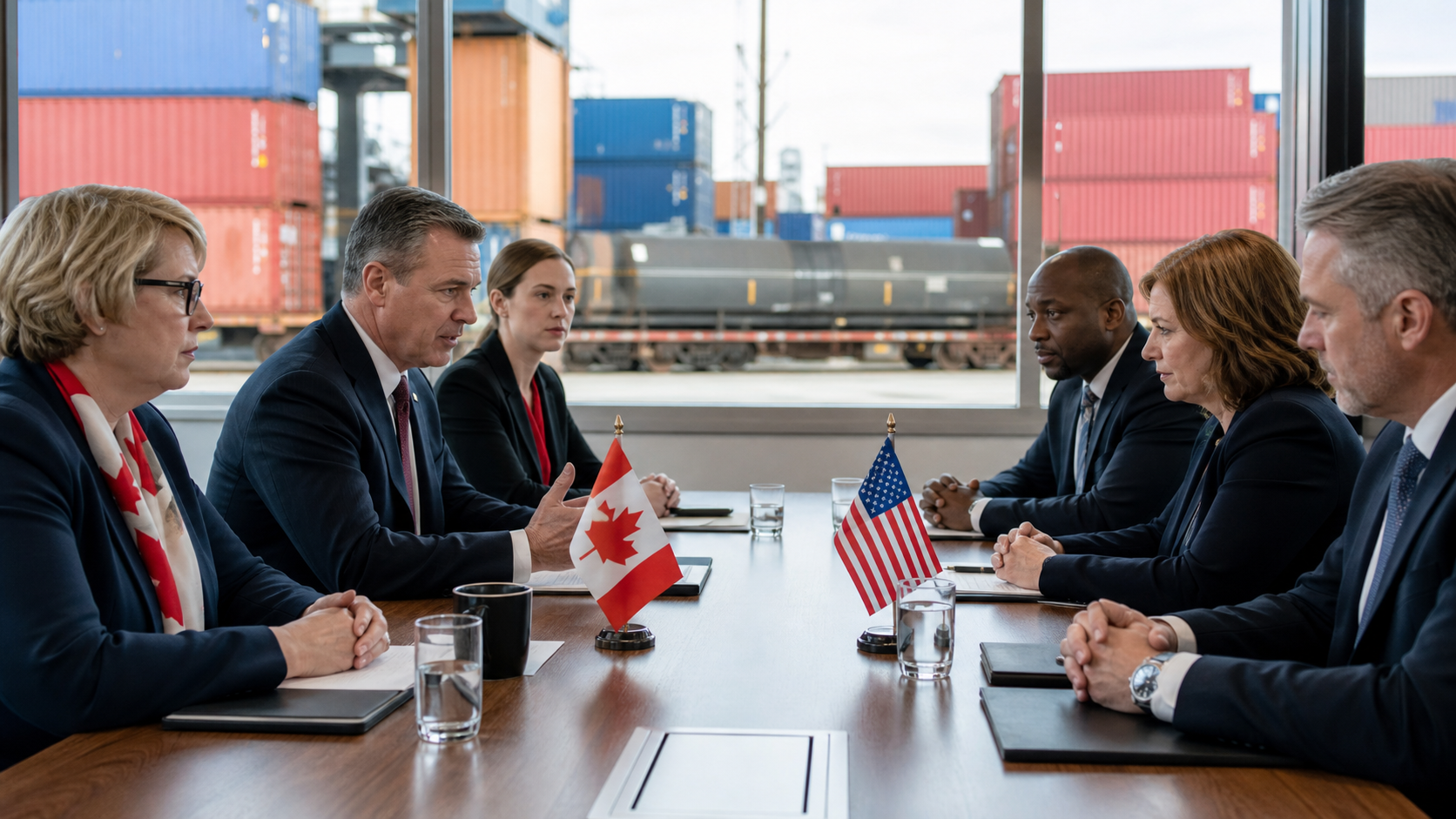
Trade talks between the United States and Canada have broken down, with the United States imposing 50 percent tariffs on Canadian goods and Canada pledging dollar-for-dollar retaliation, Reuters reports. The escalation is striking not only because the two countries are neighbors, but because their economies have been built around supply chains that cross the border repeatedly before a product reaches a customer.
A tariff is collected at the border, but its costs spread through factories, transport networks, retailers and households. Importers may absorb part of the charge, negotiate lower prices from suppliers or pass it to customers. Companies can seek alternatives, yet changing a supplier is rarely immediate when products must meet safety rules, technical standards or delivery schedules.
Integrated production is the central risk
North American manufacturing does not fit neatly inside national boundaries. Automotive parts, machinery, energy products, food and construction materials move in both directions. A component can cross the border more than once during production. A broad tariff therefore risks taxing value created by firms and workers on both sides, not simply penalizing a distant foreign producer.
Smaller companies are especially exposed because they have less cash to cover sudden duties and less leverage to renegotiate contracts. Large corporations may shift orders or hedge currencies; a regional manufacturer may depend on one specialized supplier. Uncertainty can be as damaging as the tariff itself because firms delay hiring and investment when they cannot estimate future costs.
Retaliation expands the impact
Canada’s planned dollar-for-dollar response is intended to create negotiating leverage, but retaliatory measures also create domestic losers. Governments often choose targets that apply political pressure while trying to protect consumers and essential inputs. That calculation is difficult at a 50 percent rate. Even carefully selected lists can hit businesses that rely on imported equipment or ingredients.
Provinces and U.S. states will experience the dispute differently. Border regions with dense trade links may feel disruptions quickly, while resource-producing areas face commodity-specific pressures. Currency moves can offset part of the price change, but they cannot remove administrative costs or restore confidence in long-term contracts.
Consumers meet the tariff later
The effect on store prices may not appear immediately. Retailers hold inventory purchased before the new duty, and some companies accept lower margins temporarily. Over time, replacement stock reflects the higher cost. Customers may switch brands, postpone purchases or reduce spending elsewhere. That is how a trade action aimed at producers can become a broader economic drag.
Central banks will also watch the inflation signal. Tariffs can raise prices even while weaker investment slows growth, creating an uncomfortable policy mix. The scale depends on exemptions, duration and how quickly businesses find substitutes, but the direction of pressure is clear.
A negotiated exit still matters
The United States and Canada have mature institutions and extensive channels for resolving disputes. That does not guarantee a quick settlement, but it gives both governments a framework for returning to negotiation. Businesses will want clear rules, realistic transition periods and relief for goods already in transit or contracted before the announcement.
The dispute tests whether political pressure can be applied without damaging an economic relationship that took decades to build. Retaliation may demonstrate resolve, yet the durable solution is a set of terms both sides can administer predictably. Until that emerges, companies will conserve cash, reconsider investment and prepare for costs that neither country’s consumers ultimately avoid.
Beyond the immediate headlines
Longer-term damage can arise when companies redesign supply chains around the expectation that political risk will persist. New warehouses, suppliers and production lines are costly to reverse even after a dispute ends. That means a short tariff confrontation can leave a structural footprint, reducing the efficiency created by decades of specialization.
Workers need clarity as much as executives. Plants facing higher input costs may cut overtime or postpone expansion before announcing larger changes. Governments should publish accessible guidance for affected firms and coordinate customs administration so uncertainty at the border does not compound the tariff itself.
Consumers, workers and investors will measure success by restored predictability, not by which capital produces the strongest announcement.
Restoring confidence will require practical deadlines, exemptions and a credible negotiating channel.