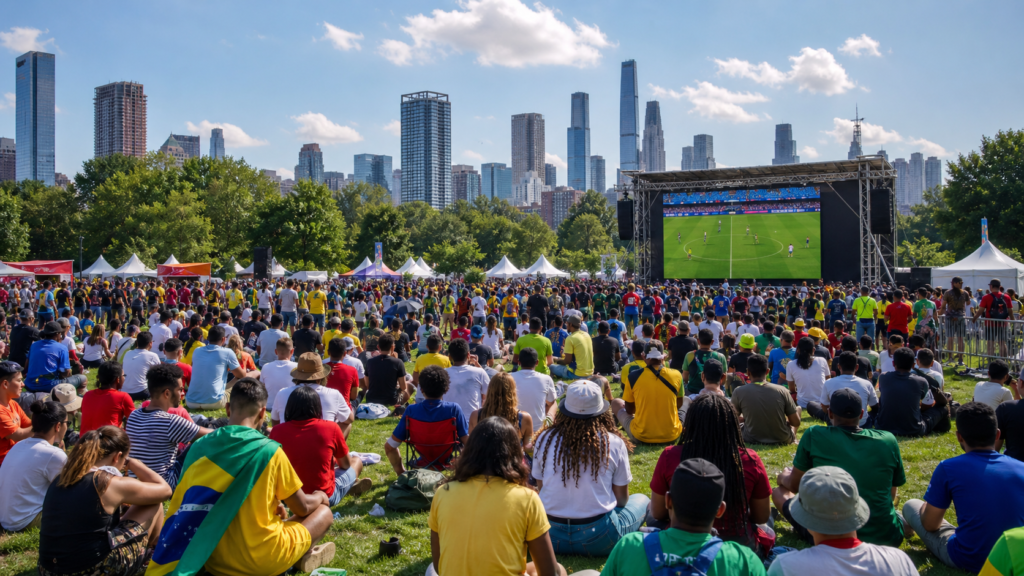
Fastgist take: The World Cup is no longer only a stadium event. The fan festivals around it are becoming major city business.
When people think about the World Cup, they usually picture packed stadiums, national flags, dramatic goals, and supporters celebrating in the stands. But one of the biggest stories around the modern tournament is happening outside the stadium gates. Fan festivals are turning football into a city-wide entertainment economy, giving host cities a way to bring the tournament to people who may never hold a match ticket.
Business Insider reported that Philadelphia built a free 39-day World Cup FanFest that attracted more than 425,000 visitors. That number matters because it shows the scale of the opportunity. A public viewing event is not just a big screen in a park. It can become a destination for food vendors, local performers, sponsors, tourists, families, and casual fans who want to feel connected to the tournament without paying stadium prices.
For host cities, this is powerful. A match may last about two hours, but a fan zone can run all day and continue for weeks. Visitors may buy meals, use transit, book hotel rooms, shop nearby, attend concerts, and explore neighborhoods. Local businesses can benefit from the flow of people if the city plans the event properly. Sponsors also get a more accessible audience than they would inside a stadium, where space is limited and tickets are expensive.
The accessibility part is important. The World Cup can be costly. Flights, hotels, match tickets, and transportation add up quickly. A free or low-cost fan festival gives residents and visitors a different way to participate. It helps turn the tournament from an elite-ticket event into a public experience. That can deepen the connection between the city and the sport, especially in places where football is still growing as a mainstream American entertainment product.
The business opportunity is not automatic, though. Cities have to manage heat, crowd safety, security, sanitation, noise, public spending, and neighborhood disruption. If planning is poor, a fan festival can frustrate residents or leave local businesses outside the main traffic flow. If planning is strong, it can spread visitors across the city and make the event feel like a civic celebration rather than a temporary inconvenience.
Philadelphia’s example is interesting because the event was built around more than match viewing. The strongest fan festivals mix sport with culture. Food, music, family activities, local vendors, and public gathering space all help extend the experience. People may arrive for the match, but they stay because the event feels like a festival. That is where the economics become more attractive.
There is also a media effect. A crowded fan zone photographs well. Videos of supporters reacting to goals can travel across social platforms faster than official marketing. That gives the host city free visibility and helps build the feeling that it is part of a global moment. For tourism officials, that kind of attention can be valuable long after the final whistle.
For sports fans, the rise of fan festivals changes how tournaments are experienced. You no longer need to be inside the stadium to feel the atmosphere. A city park, downtown square, or public plaza can become the emotional center of the tournament for thousands of people. That shared feeling is one reason football travels so well across cultures.
For Fastgist readers, the bigger lesson is that sports, entertainment, and business are increasingly connected. A World Cup fan festival is a sports event, a tourism strategy, a sponsorship platform, a food-and-drink opportunity, and a cultural gathering at the same time. The cities that understand that will get more from hosting than a few match days.
The next question is whether other host cities copy the free-access model and whether local businesses can measure real gains from the crowd traffic. If they can, fan festivals may become one of the most important parts of future mega-events.
Sources: Business Insider FanFest report.