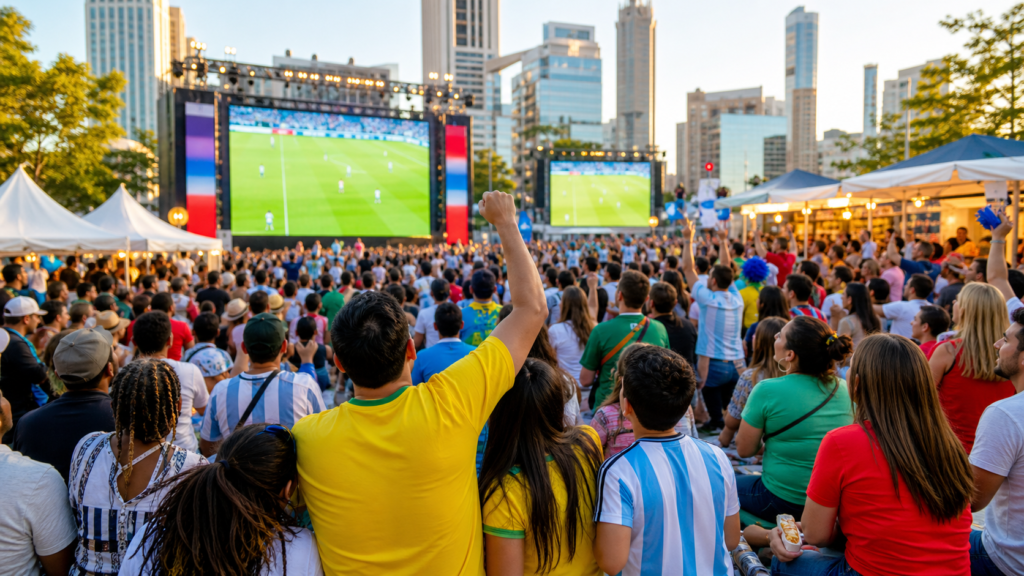
Fastgist take: The World Cup is not only making money inside stadiums. Some of the most interesting business is happening outside them, where fan festivals are turning public spaces into city-scale events.
Business Insider reported that Philadelphia’s free 39-day FIFA FanFest has drawn more than 425,000 attendees, while Atlanta’s festival has pulled in more than 450,000 visitors. Those numbers show why host cities do not treat fan zones as decorative extras. They are tourism tools, sponsorship platforms, hospitality engines, and cultural showcases.
The appeal is simple: not everyone can afford match tickets, travel packages, or premium seating. A fan festival gives people a way to feel close to the tournament without paying stadium prices. That creates a wider audience and keeps the city buzzing even when there is no match happening that day.
For local businesses, the effect can spread through restaurants, hotels, rideshare services, public transit, street vendors, and neighborhood attractions. A family that attends a free viewing event may still buy food, merchandise, parking, or drinks. A visitor who comes for a fan zone may extend the trip into a full city day. That is why civic leaders care about the public-event layer of major sports.
Philadelphia’s event is especially notable because Business Insider reported that planning began years before the tournament, with organizers raising private funding and pairing it with public investment. That long runway matters. Big-event success is rarely improvised. It requires security, crowd management, transit planning, weather protocols, vendor coordination, and a clear idea of what the city wants visitors to remember.
Atlanta’s festival shows the cultural side of the same story. Business Insider described crowds drawn by music, public transport access, free and paid ticket options, and a diverse mix of fans. The best fan zones do not feel like waiting rooms for matches. They feel like festivals that happen to have soccer at the center.
That distinction is important for monetization. A city can sell sponsorships around screens, stages, food areas, VIP sections, and branded experiences without making the entire event feel closed off. The challenge is balance: keep the atmosphere accessible enough for ordinary fans, but structured enough for partners to see value.
For broadcasters and digital platforms, fan festivals also produce shareable scenes. Big crowds, flags, music, and emotional reactions create the kind of visual proof that a tournament has entered the culture. That helps sell the event to viewers who are not tracking every bracket detail.
Fastgist will keep watching this because it connects sports, money, travel, and entertainment. The stadium is still the main stage, but the modern World Cup economy is bigger than the match ticket. Fan festivals are showing how cities can turn global attention into everyday foot traffic, local spending, and a story that lasts beyond the final whistle.
Sources: Business Insider, Business Insider Atlanta Fan Festival report.