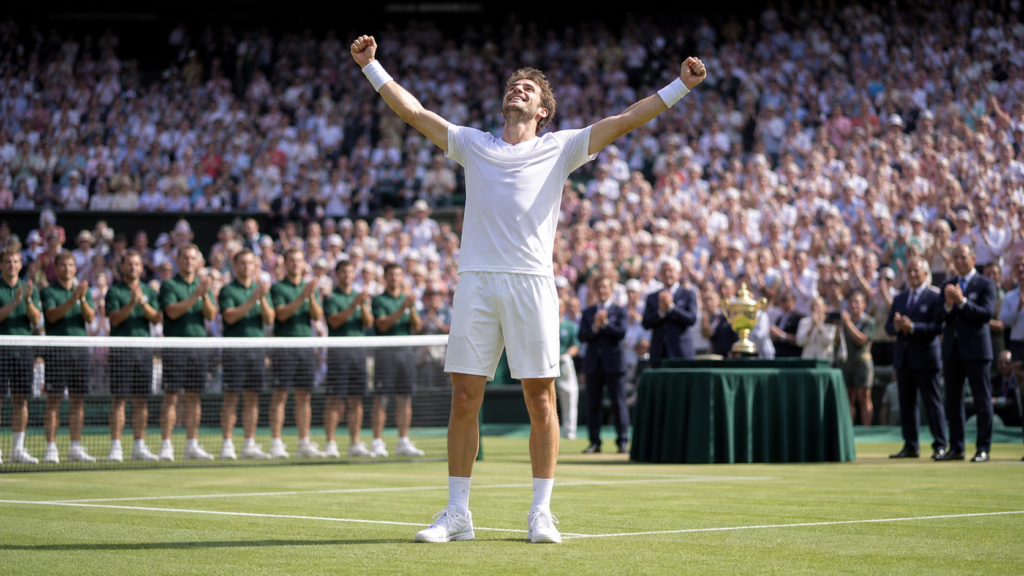
Fastgist take: Jannik Sinner’s latest Wimbledon title is not just another trophy. It is a statement about control, recovery, and the kind of quiet dominance that can define an era.
The Associated Press reported that Sinner defeated Alexander Zverev in four sets, 6-7 (7), 7-6 (2), 6-3, 6-4, to claim his second consecutive Wimbledon title and fifth Grand Slam trophy. The scoreline tells the story of a final that could have turned awkward early. Sinner dropped the first set in a tight tiebreak, then answered by taking the second tiebreak decisively before pulling away.
That response is what separates a top player from a champion with staying power. Grass can punish impatience. A few loose service games, a mistimed return, or a rushed approach can change the entire emotional temperature of a match. Sinner’s win showed he could absorb pressure without trying to solve the match all at once.
The victory also keeps his name at the center of men’s tennis at a moment when the sport is still moving from one generation to the next. Fans have spent years asking who would carry the game after the era of the older superstars. Sinner is one of the clearest answers because his rise has not been built on one hot tournament. It has been built on repeatable strengths: clean ball-striking, improved movement, better serving, and a calm match temperament.
What makes this Wimbledon win especially valuable is the surface. Winning once at the All England Club can be a breakthrough. Winning back-to-back titles proves adaptability. Grass rewards players who serve well, move sharply, and make fast decisions. Sinner’s ability to turn defense into controlled offense gives him a strong foundation on a surface that can expose hesitation.
There is also a branding and business angle. Tennis needs stars who travel across markets, and Sinner now has the resume, style, and consistency to anchor global interest. A Wimbledon champion carries a different kind of commercial weight because the event reaches both hardcore tennis followers and casual summer sports viewers.
Zverev’s performance should not be dismissed. Taking the first set in a final of this size means he forced Sinner to solve real problems. But once Sinner settled, the match tilted toward the player with the cleaner patterns and better emotional management.
For Fastgist readers, the lesson is simple: greatness is not always loud. Sometimes it looks like losing a first-set tiebreak, resetting, and making the next three sets feel increasingly inevitable. Sinner’s Wimbledon win adds another layer to a career that is becoming less about potential and more about standard-setting.
Sources: Associated Press.