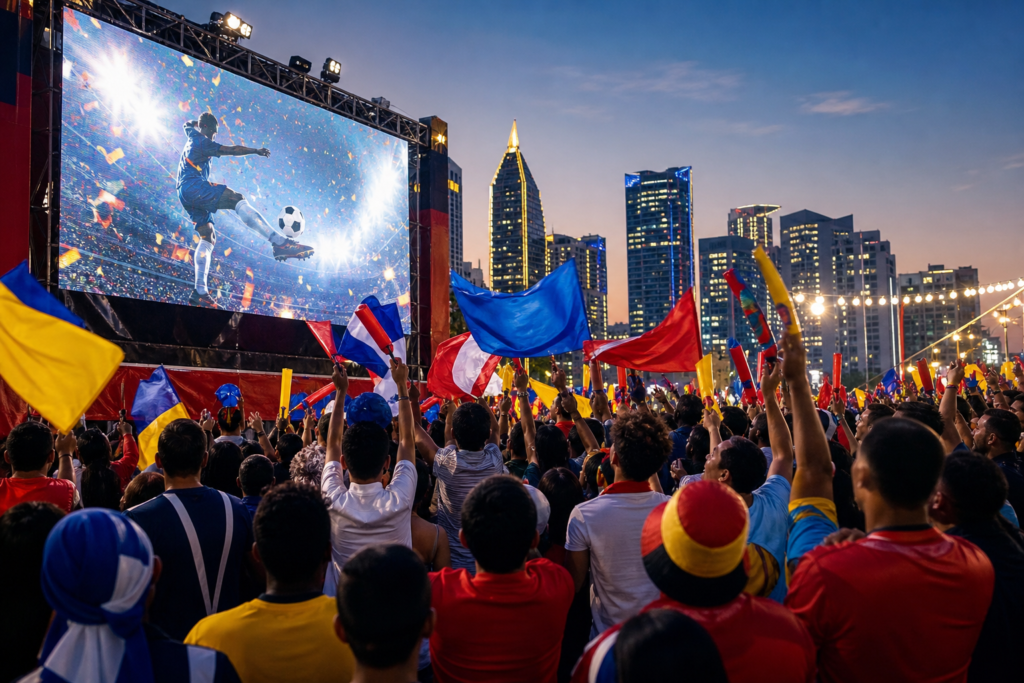
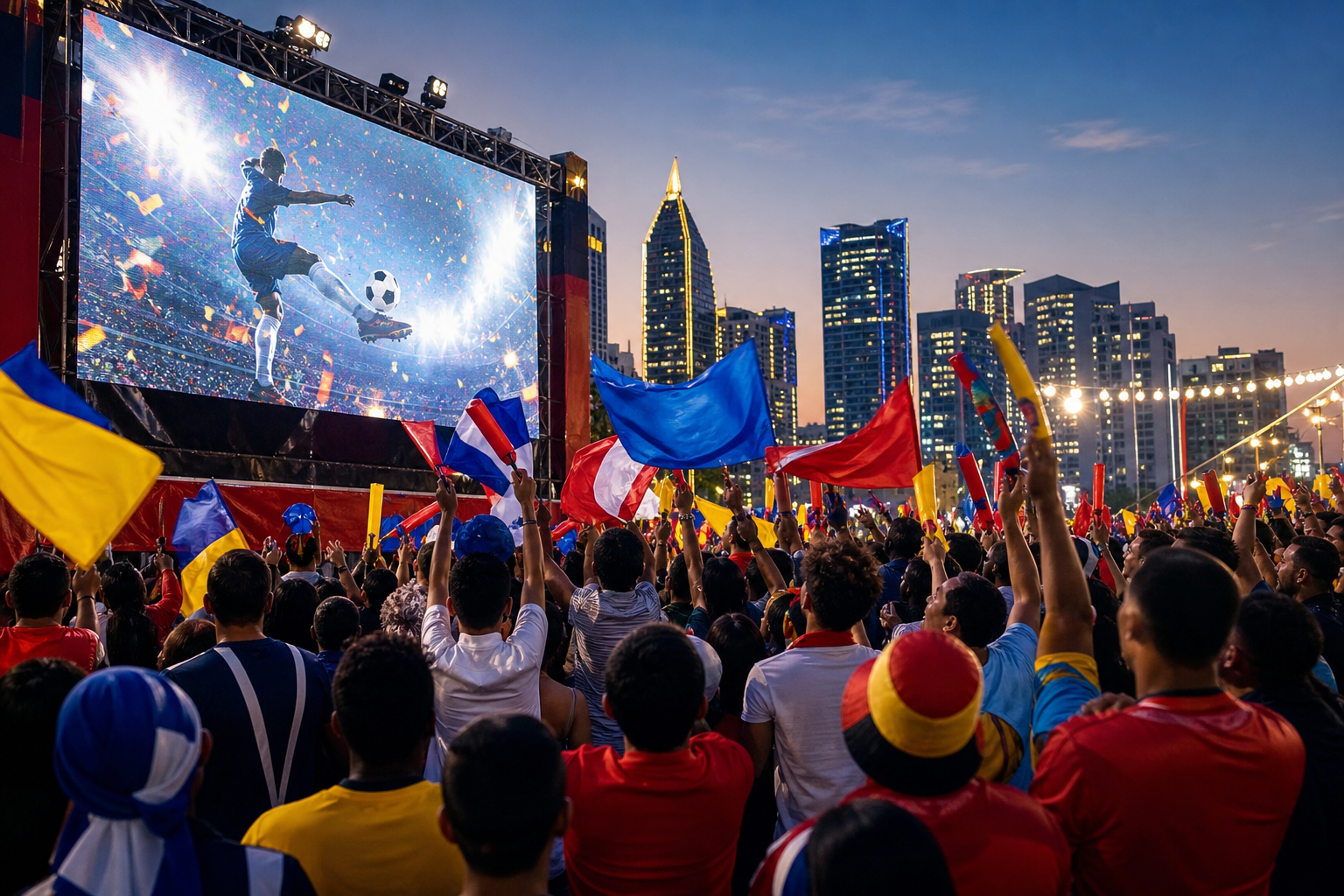
Fastgist take: Football’s biggest tournaments now stretch far beyond the stadium. The match remains the core product, but the business around it increasingly lives in fan zones, viewing parties, sponsor activations, transport hubs, hotels, restaurants, and city centers. For host cities and brands, the crowd outside the stadium can be just as important as the ticketed audience inside it.
The appeal is obvious. Stadium capacity is limited, but public viewing areas can bring thousands of people into a shared atmosphere. Fans who cannot afford tickets, cannot get tickets, or simply want a communal experience can still feel part of the tournament. That creates value for cities because visitors spend money on food, drinks, transport, merchandise, and accommodation. It creates value for sponsors because the tournament becomes a full-day environment rather than a two-hour broadcast.
This model has become more sophisticated. Fan zones are not just big screens and barriers. They often include music, food vendors, brand booths, family areas, security plans, public transport coordination, and social-media-friendly spaces. The goal is to make the event feel safe, commercial, and memorable. Done well, it turns football into a city festival.
There are risks too. Large crowds require careful planning. Security, weather, crowd flow, alcohol management, emergency access, and transport capacity all matter. If a fan zone is poorly organized, the same energy that makes it exciting can become difficult to control. That is why cities increasingly treat fan zones as major event operations, not casual gatherings.
For broadcasters and sponsors, the fan-zone boom changes the shape of the audience. A single match can now produce multiple layers of content: the game itself, crowd reactions, celebrity appearances, sponsor events, local business stories, and viral clips from public viewing areas. That helps the tournament travel across platforms. A dramatic fan reaction can circulate almost as widely as a goal.
Local businesses can benefit, but the impact is uneven. Bars, restaurants, food trucks, hotels, and transport operators may see a lift. Smaller shops outside event corridors may not. Cities that plan carefully can spread the benefit by connecting fan zones to local districts rather than isolating them in one commercial pocket. The best version of the model gives visitors a reason to explore, not just gather.
Football authorities also gain from the broader atmosphere. A tournament that feels alive across a city looks bigger on television and social media. That visibility can support future bids, sponsorship values, and tourism campaigns. It also helps turn casual viewers into participants. Someone who watches one match in a crowd may become more emotionally connected to the tournament than someone scrolling past highlights alone.
The next question is whether fan zones can remain accessible. If everything around a tournament becomes too expensive, the public-facing promise weakens. Cities and organizers need a balance: commercial enough to pay for operations, but open enough to feel like a shared event. That balance will shape how fans remember the tournament.
For Fastgist, the fan-zone story matters because it sits where sports, entertainment, tourism, and money meet. Modern football is not only played on the pitch. It is staged across cities, sold across platforms, and experienced by fans who may never enter the stadium.
Sources: BBC Sport football coverage, Guardian football coverage, AP sports coverage, and city-event reporting around major tournament viewing areas.
Source links: BBC Sport football; The Guardian football; AP Sports.