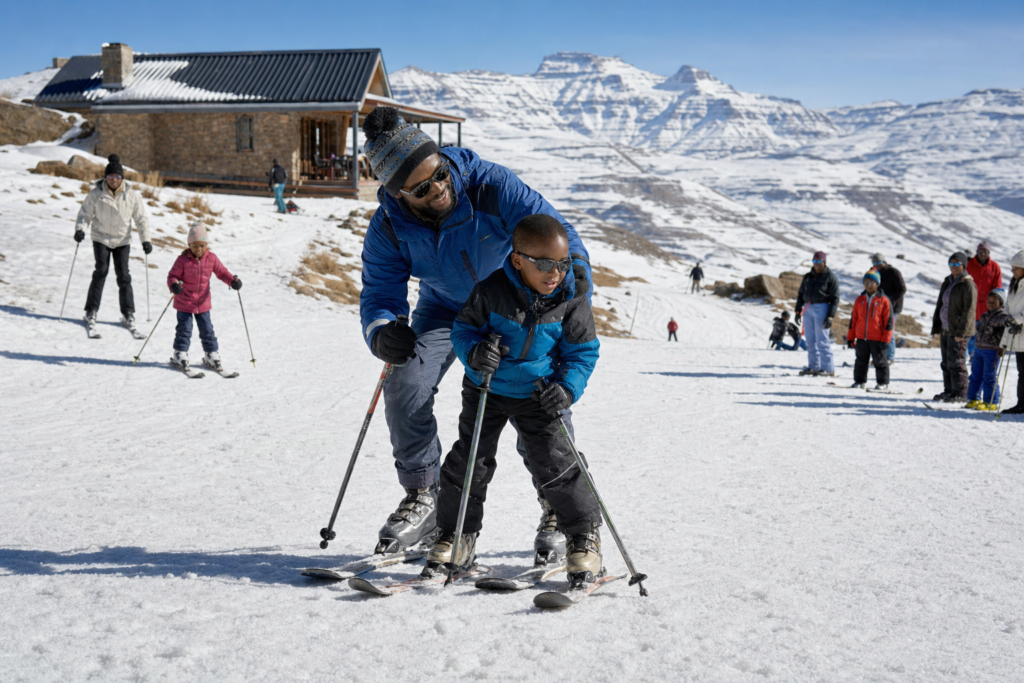
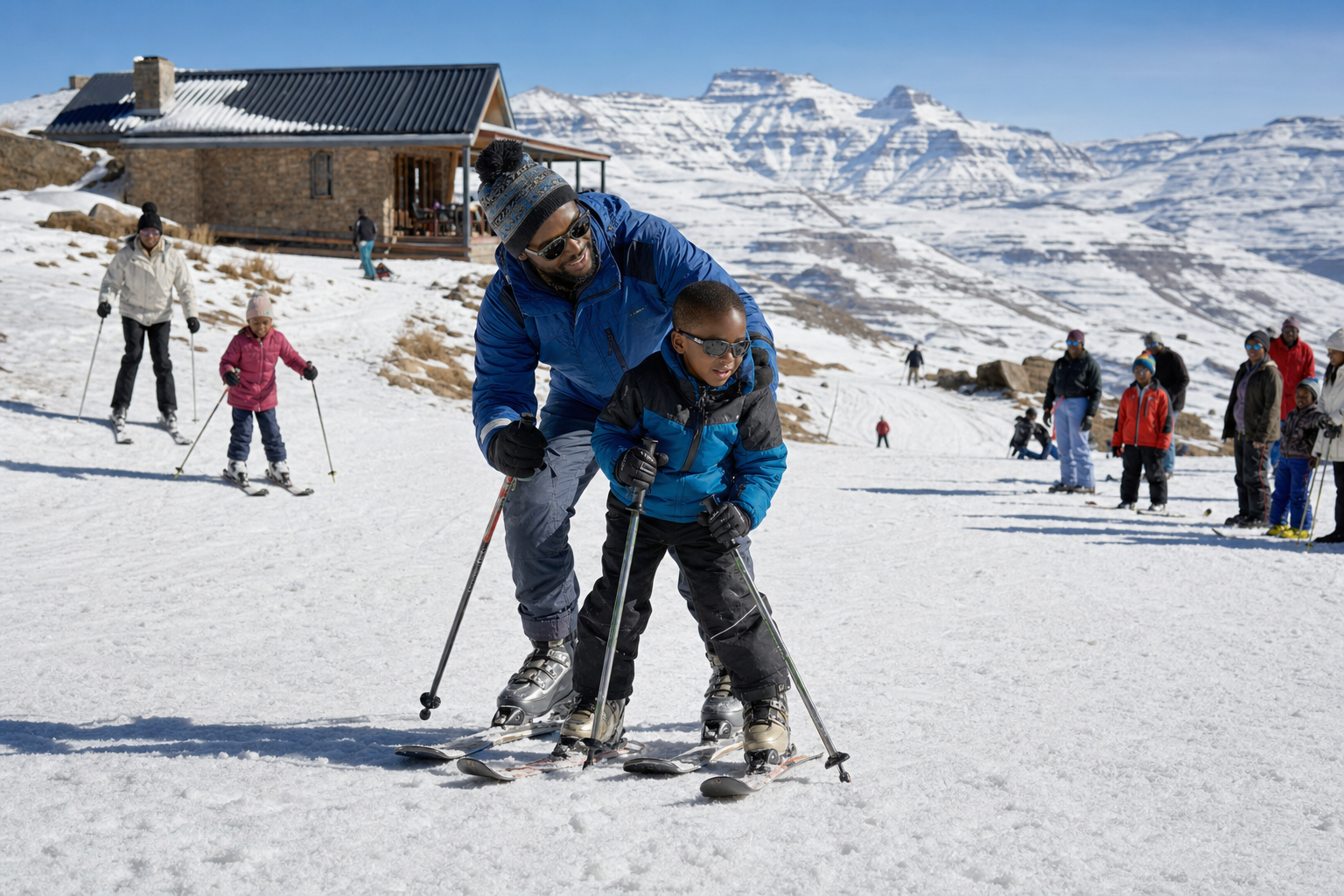
High in Lesotho’s Maloti Mountains, winter tourism is creating an experience many international travellers do not associate with southern Africa: skiing, snow lessons and busy mountain lodges.
The Associated Press reported that thousands of visitors have travelled to Afriski, the only fully operational ski resort in sub-Saharan Africa. The resort sits about 3,200 metres above sea level, operates across roughly 17 hectares and employs 227 people during the season.
A rare climate becomes an economic asset
Lesotho’s altitude gives it a tourism product that nearby destinations cannot easily copy. Travellers from South Africa make up around 70% of visitors, creating a regional market within driving distance. For families, first-time skiers and adventure tourists, the novelty is part of the attraction.
The wider lesson is that small countries do not need to compete in every category. A distinctive natural feature can support accommodation, restaurants, transport, equipment rental, instruction and local retail. The value comes from the network around the attraction, not only the ski lift.
Tourism already matters to Lesotho
The sector contributes about 7% of the country’s economic output, according to figures cited by AP. That makes visitor spending important for jobs and foreign exchange, especially in remote areas with limited formal employment.
Seasonal work can still be precarious. Operators can create more durable value by training staff in hospitality, maintenance and outdoor safety, skills that transfer beyond a single winter. Local suppliers should also have opportunities to provide food, crafts, transport and cultural experiences.
Snow is not guaranteed
A mountain business depends on weather. Natural snowfall can vary, and snow-making requires water, energy and suitable temperatures. Climate change adds uncertainty, making careful resource management essential.
Expansion should therefore avoid assuming that every future season will look like the best year. Resorts need conservative financial plans, water safeguards and activities that attract visitors outside peak snow weeks. Hiking, cycling, cultural tourism and conferences can help spread revenue across the calendar.
Access and safety shape the reputation
Remote landscapes are part of Lesotho’s appeal, but roads, weather information and emergency support determine whether the journey feels adventurous or simply difficult. Reliable route updates and coordinated rescue services are particularly important for visitors unfamiliar with mountain conditions.
Regional cooperation can improve access. South African travel operators, border authorities and Lesotho’s tourism businesses all influence the same customer experience. Long queues or unclear requirements can weaken demand before a visitor reaches the resort.
A chance to tell a broader story
Images of African skiing challenge a narrow view of the continent’s geography. Lesotho can use that attention to introduce visitors to Basotho culture, mountain communities and other destinations rather than treating the resort as an isolated attraction.
That requires thoughtful marketing. The strongest message is not that the country imitates European resorts, but that it offers a distinctly southern African winter experience. Local food, design and storytelling should remain visible.
Afriski’s busy season shows how a rare natural advantage can create economic momentum. The next challenge is to keep more of the value in local communities while protecting the landscape that makes the business possible.
If investment improves year-round activities, workforce skills and safe access, Lesotho’s snow season can become more than a curiosity. It can serve as a practical example of how a small tourism economy builds global attention from something genuinely its own.