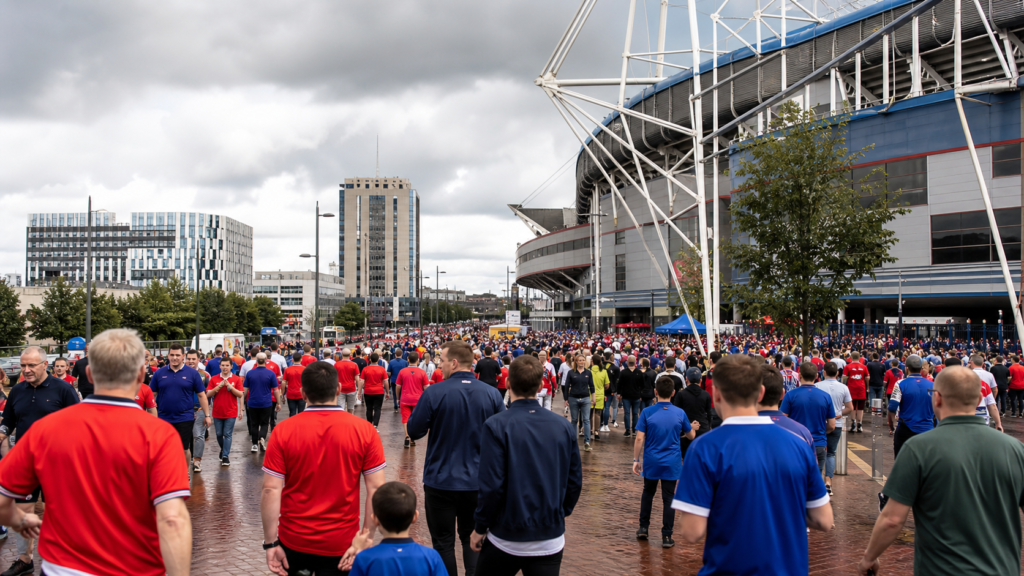
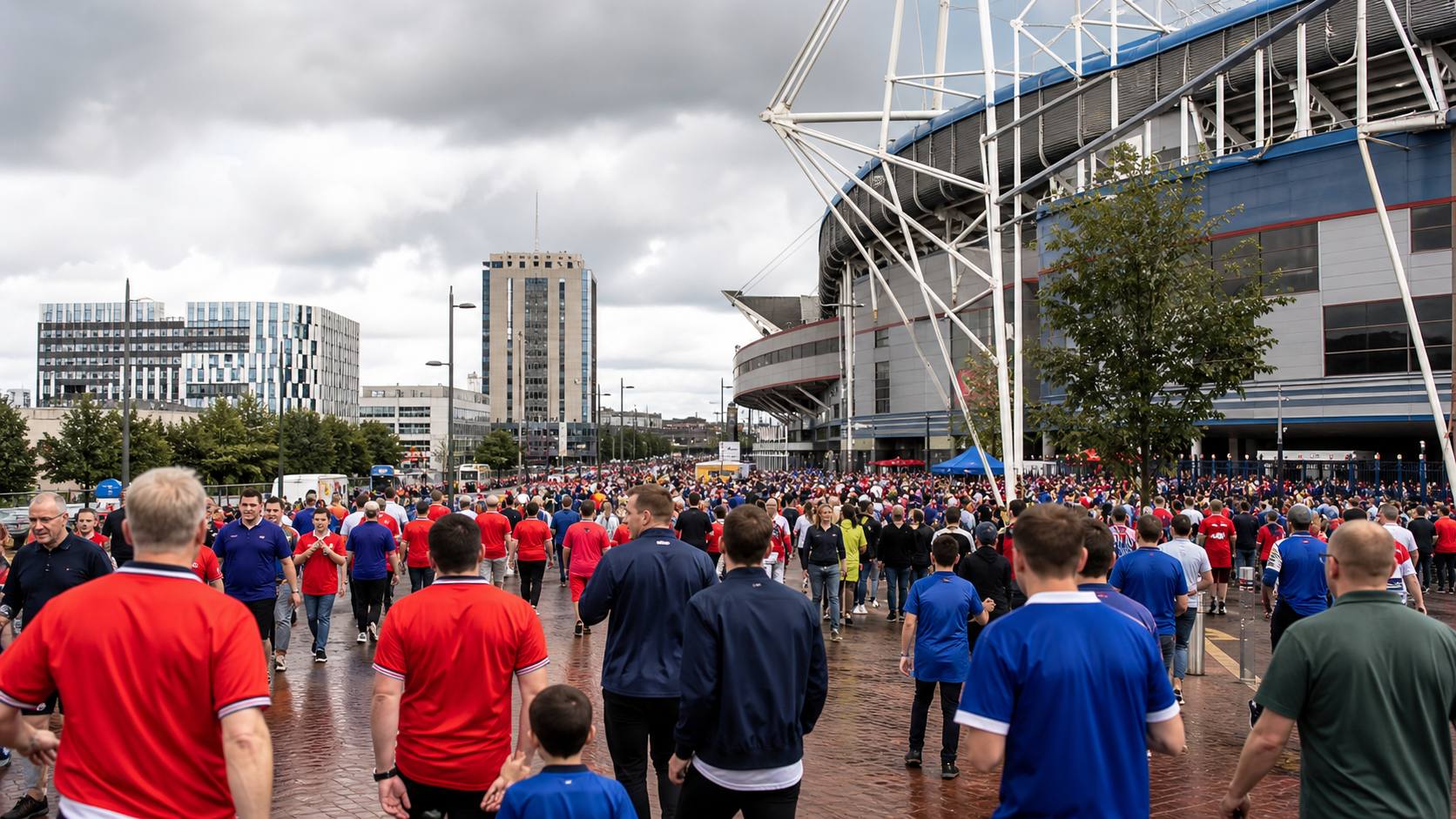
The FA Community Shield has long functioned as English football’s ceremonial bridge between summer and the new domestic season. In 2026, however, the occasion carries an extra dimension: Premier League champions Arsenal and FA Cup winners Manchester City are meeting at the Principality Stadium in Cardiff rather than Wembley.
The Premier League’s official calendar says the move was required because music concerts were taking place at Wembley. Cardiff last hosted the event in 2006. That practical scheduling decision creates a useful case study in what happens when a nationally recognized football occasion leaves its usual home and becomes a one-day economic and cultural event for another city.
A familiar match in a different setting
The Community Shield is not a league fixture, yet it has a distinct place in the football calendar. Supporters see new signings, coaches test combinations under competitive pressure and broadcasters begin the narrative of the coming campaign. The trophy matters, but anticipation is the event’s real product.
Moving the match changes that experience. Wembley has transport patterns, gathering places and traditions that regular visitors understand. Cardiff offers a compact city-centre stadium whose location can make the match feel woven into the surrounding streets. Supporters arriving by rail step into an urban environment where restaurants, hotels and public spaces are all close to the ground.
That concentration can produce a visible economic lift. Travelling fans spend on transport, meals and accommodation, while local businesses gain customers who may not otherwise visit on an August weekend. The effect is uneven and temporary, but a sold-out national occasion gives a host city exposure that extends beyond the turnstiles.
Why venue flexibility matters
Major stadiums increasingly serve several markets at once. Football competes with concerts, rugby, boxing and corporate events for dates. A venue calendar is therefore a business plan, not simply a list of matches. When one stadium is unavailable, organizers need credible alternatives with the capacity, security operations, media facilities and transport connections to handle a large audience.
The Principality Stadium fits that role. Its central location and experience with major rugby and football events reduce the operational risk. For organizers, having more than one dependable national-scale venue creates resilience. It prevents a clash in one city from forcing a major event into an unsuitable date or a much smaller ground.
There is also a geographic argument. English football has a vast audience outside London, including supporters across Wales and the west of Britain. Taking a prominent match to Cardiff does not solve the affordability and access problems surrounding elite football, but it shifts the journey for some fans and gives another city ownership of the occasion.
The pressure on supporters
A venue change can also create costs. Fans accustomed to travelling to London must revise plans, and late scheduling details can make rail tickets or hotel rooms more expensive. Supporter experience depends on clear information about kickoff times, transport capacity, ticket allocation and post-match departures.
Organizers should judge success by more than attendance. A full stadium is expected when two major clubs meet. The harder questions are whether supporters moved safely, whether disabled visitors had reliable access, whether prices remained reasonable and whether local residents were prepared for the crowd.
Those details affect how future relocations are received. If a move is smooth and enjoyable, fans may welcome a more mobile curtain-raiser. If travel becomes chaotic, the event can look like another decision made around venue revenue rather than the people in the seats.
A wider opportunity for host cities
Cardiff’s opportunity is not limited to match-day spending. Television coverage repeatedly names and shows the host city, strengthening its association with major events. Tourism bodies and local businesses can use that attention to encourage visitors to return for concerts, rugby, food and cultural trips.
The strongest event strategies connect the stadium to the city rather than sealing the crowd inside a security perimeter. Wayfinding, public transport, fan zones and cooperation with hospitality businesses can turn several hours of football into a broader visitor experience. That matters because many spectators will form their impression of Cardiff during a single crowded day.
What comes after the final whistle
The 2026 Community Shield will ultimately be remembered by supporters for what happens on the pitch. Yet its relocation is significant because it demonstrates that football’s established rituals do not have to be tied permanently to one building.
Wembley will remain central to the English game, and exceptional scheduling circumstances triggered this move. Still, Cardiff’s turn shows the value of maintaining multiple event-ready cities and stadiums. The benefits can include operational flexibility, regional access and a temporary boost for local commerce.
The lesson is not that every edition should travel. It is that organizers should evaluate venue choices with a wider scorecard: sporting quality, supporter convenience, city impact and long-term event resilience. When those elements align, moving a traditional occasion can add meaning rather than merely change the postcode.