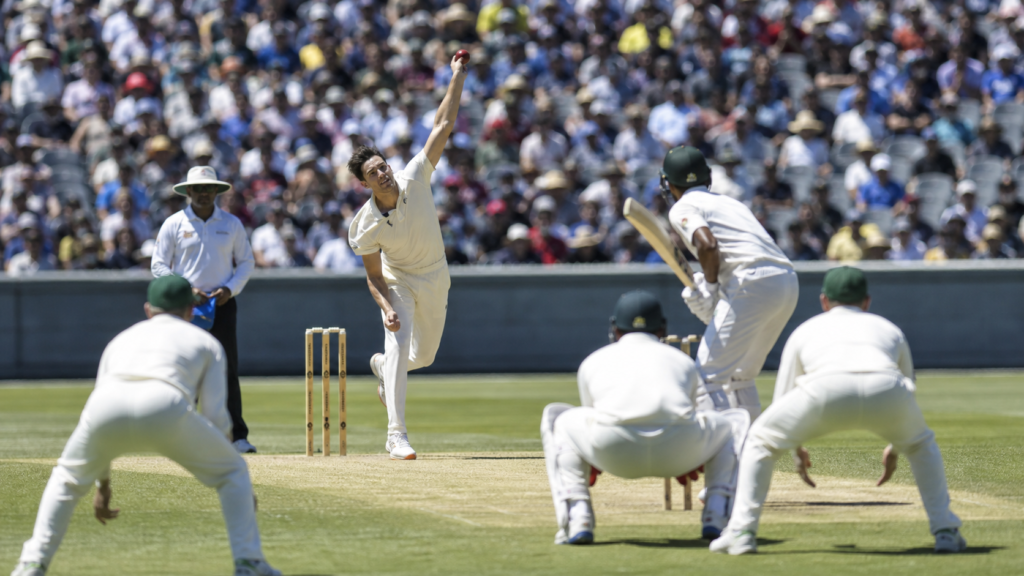
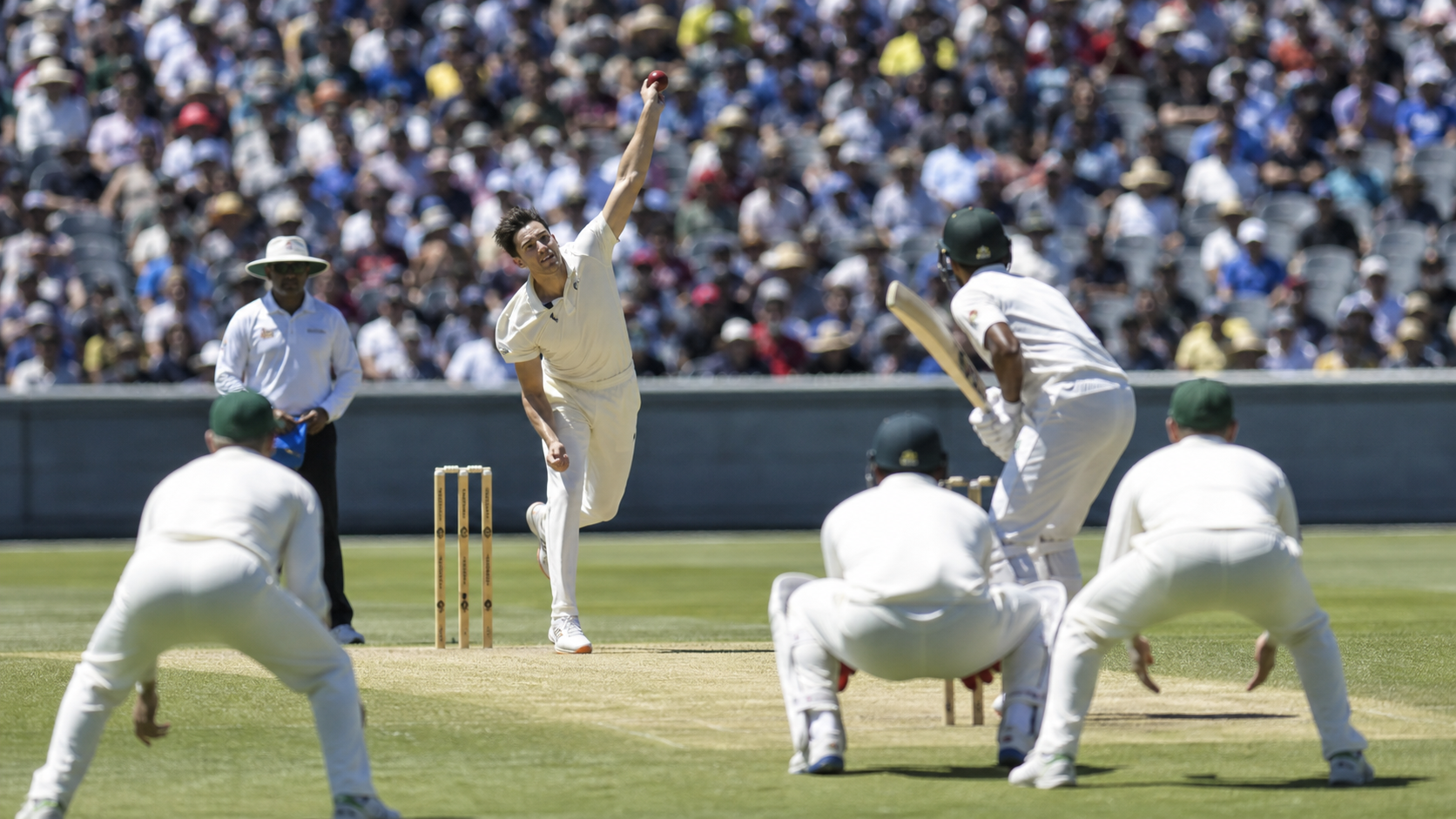
The second match between Australia and Bangladesh opened with a startling exchange of fast-bowling dominance. Reuters reports that left-armers Mitchell Starc and Shoriful Islam each took six wickets on a chaotic first day. Bangladesh were dismissed for 64 before Australia built a 101-run lead, leaving the match moving at a pace more familiar to limited-overs cricket than a five-day contest.
Low-scoring Test days can look simple on a scorecard, but they are usually created by a difficult combination of conditions, disciplined bowling and batting decisions made under pressure. A moving ball narrows the batter’s margin for error. Deliveries that could be safely ignored on another surface demand a stroke, while balls aimed at the stumps punish hesitation. Once wickets begin falling, new batters have little time to settle.
The left-arm angle
Left-arm pace offers a natural angle across right-handed batters, with the threat of swing back toward the pads and stumps. Starc has built a long international career around that combination of speed, full length and late movement. Shoriful’s six-wicket response ensured the day did not become a one-sided exhibition. His spell gave Bangladesh a route back into the contest after their batting collapse.
The symmetry of the performances is compelling: two attacks, two left-arm leaders and a pitch that rewarded accuracy. Yet the match situation still favored Australia because their batters converted the opportunity into a substantial first-innings advantage. On a day when runs were unusually expensive, 101 represented more than a routine lead.
Why collapses accelerate
Batting collapses develop their own pressure. Partners become uncertain about whether to attack before receiving an unplayable delivery or defend until conditions ease. The scoreboard makes every dot ball feel heavier. Captains can keep catchers close, bowlers attack fuller lengths and the crowd responds to every near miss. Technique remains central, but decision-making becomes just as important.
Bangladesh’s challenge is now psychological as well as tactical. The team must believe Shoriful’s success proves Australia can also be dismissed cheaply, while avoiding the temptation to chase a dramatic turnaround with every delivery. Five-day matches can shift quickly after an early collapse, but recoveries are usually built through patient partnerships and relentless bowling rather than one spectacular session.
A reminder of five-day cricket’s appeal
Modern cricket offers increasingly elaborate entertainment formats, but a day like this shows why five-day cricket retains its distinctive tension. There is no need for artificial urgency when conditions make survival uncertain. Every defensive stroke carries consequence, and a lead that might appear modest in another match can become decisive.
The duel also illustrates the value of bowling variety. Teams spend heavily on batting depth and all-round options, yet a high-quality left-arm fast bowler changes the geometry of an attack. They create different sight lines, alter footwork and make partnerships with right-arm bowlers more difficult to manage.
What comes next
Australia will want to extend the lead far enough to force Bangladesh to bat with the match already leaning away from them. Bangladesh must finish the innings quickly and then show that the first 64 was an exception rather than the true measure of their batting. Conditions may ease, but damage to confidence can linger longer than movement through the air.
Starc and Shoriful have already defined the contest. One used experience and pace to dismantle a lineup; the other answered with a spell that kept his side alive. The second match now depends on which batting group can interrupt the fast bowlers’ control and turn survival into a partnership.
The captains’ calculation
Field settings become unusually aggressive in a low-scoring match. Captains can keep multiple catchers around the bat because every wicket is more valuable than restricting an occasional boundary. Bowlers must resist chasing wickets with undisciplined short balls; the best threat usually comes from repeating a demanding length and letting uncertainty do the work.
Batters, meanwhile, need a plan that produces runs without turning every scoring shot into an excessive risk. Leaving well, defending late and rotating strike can interrupt a bowler’s rhythm. One substantial partnership would change the tone because it would force the fielding side to defend a lead rather than attack without consequence.
The next session will show whether either side can sustain that discipline when fatigue and scoreboard pressure increase.