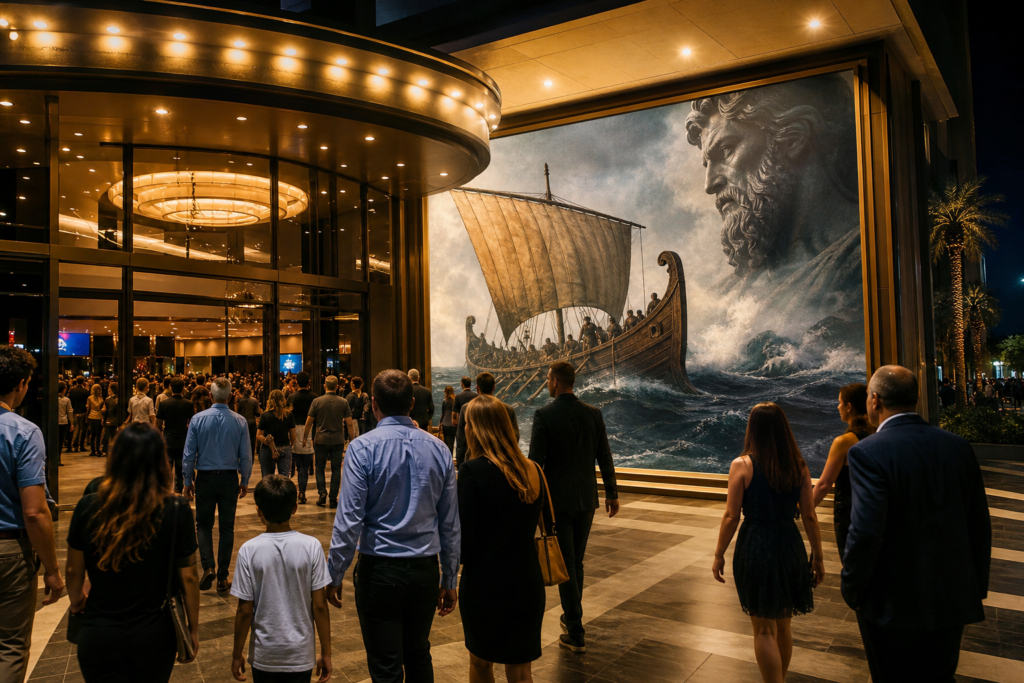
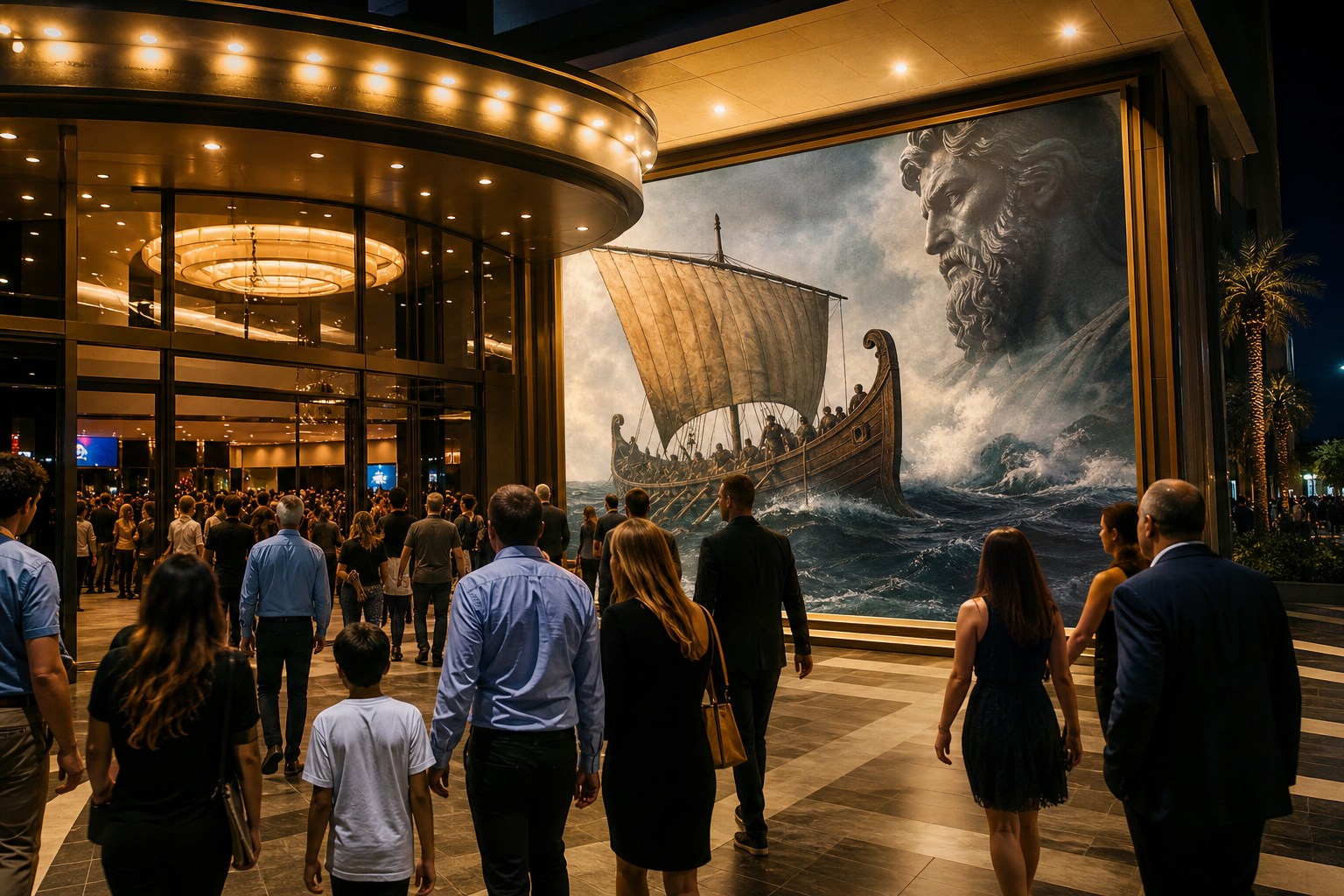
The Odyssey has crossed $639 million at the worldwide box office after two weekends, turning an ancient Greek story into one of the year’s clearest demonstrations that audiences will still leave home for a cinematic event.
Variety Australia reported global receipts of $639.6 million, including $353.2 million from international markets and $284.4 million domestically. Premium large-format screenings contributed about $140 million, showing how much the theatrical experience matters to the result.
A familiar story became new again
Homer’s epic has survived for thousands of years because its basic conflicts remain recognisable: the desire to return home, the cost of war, temptation, loyalty and identity. A major film adaptation does not need audiences to have read the poem. It needs to convert those themes into a clear emotional journey.
The source material also offers scale that suits a large screen: storms, ships, battles and unfamiliar worlds. Marketing can promise images that feel diminished on a phone, giving viewers a practical reason to buy a cinema ticket.
Premium screens changed the economics
The large contribution from Imax and similar formats shows that exhibitors are not merely selling access to a film. They are selling sound, image size and a shared event. Higher-priced premium tickets can lift revenue even when total admissions remain below earlier cinema eras.
That strategy has limits. Not every story needs an enormous screen, and theatres still require a varied calendar. But ambitious productions can anchor the business while smaller titles target audiences through distinctive storytelling and careful release plans.
International audiences are central
More than half of the reported revenue came from outside the domestic market. That balance reflects the global nature of contemporary film financing and distribution. A historical adventure can travel more easily than comedy built around highly local references, but international success still depends on dubbing, subtitles, marketing and release timing.
The result in Australia, where the film remained dominant into a second week, suggests the appeal is not confined to one market. It also demonstrates how one major release can support cinema operators during a crowded entertainment season.
The billion-dollar comparison
Toy Story 5 has already passed $1 billion worldwide, according to the same box-office report. The contrast is useful. One film draws on a family franchise built over decades; the other packages classical literature as adult spectacle. Both succeeded by offering a clear identity rather than trying to look like everything else.
Studios will inevitably search for a formula, but the lesson is not simply to spend more. Large budgets increase risk. Audiences respond when scale serves a story, marketing creates urgency and reviews or word of mouth sustain interest beyond opening weekend.
What this means for streaming
Theatrical success and streaming are not necessarily enemies. A strong cinema run can make a film more valuable when it later reaches home platforms. The challenge is timing: releasing too quickly can teach viewers to wait, while an excessively long delay can lose momentum.
The Odyssey is succeeding because it has been presented as something worth seeing now and in a particular environment. That sense of occasion is among the few advantages cinemas can defend against an endless home catalogue.
The $639 million milestone does not prove that every prestige blockbuster will work. It does show that theatrical demand remains available when filmmakers and studios give audiences a compelling reason to participate.