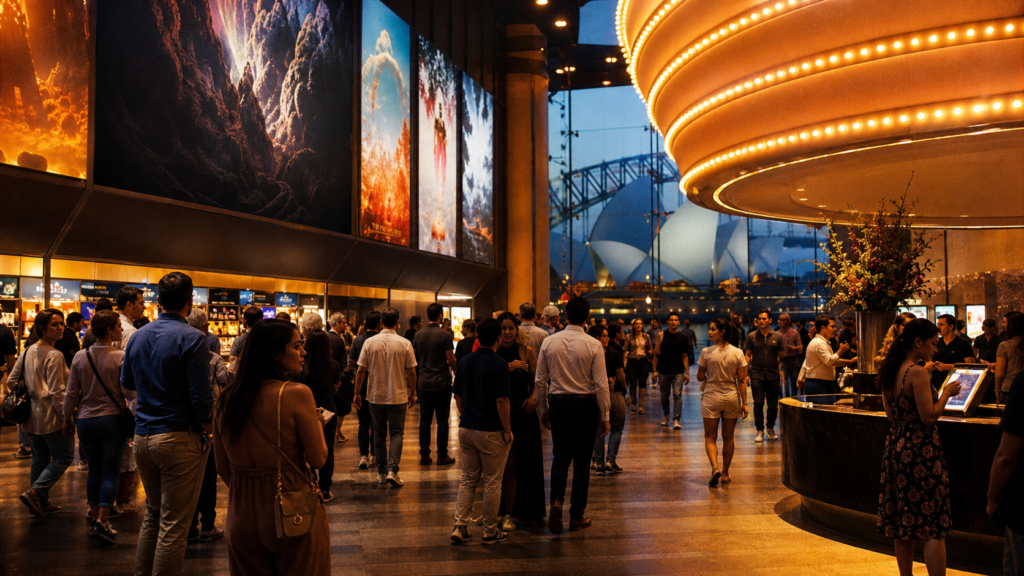
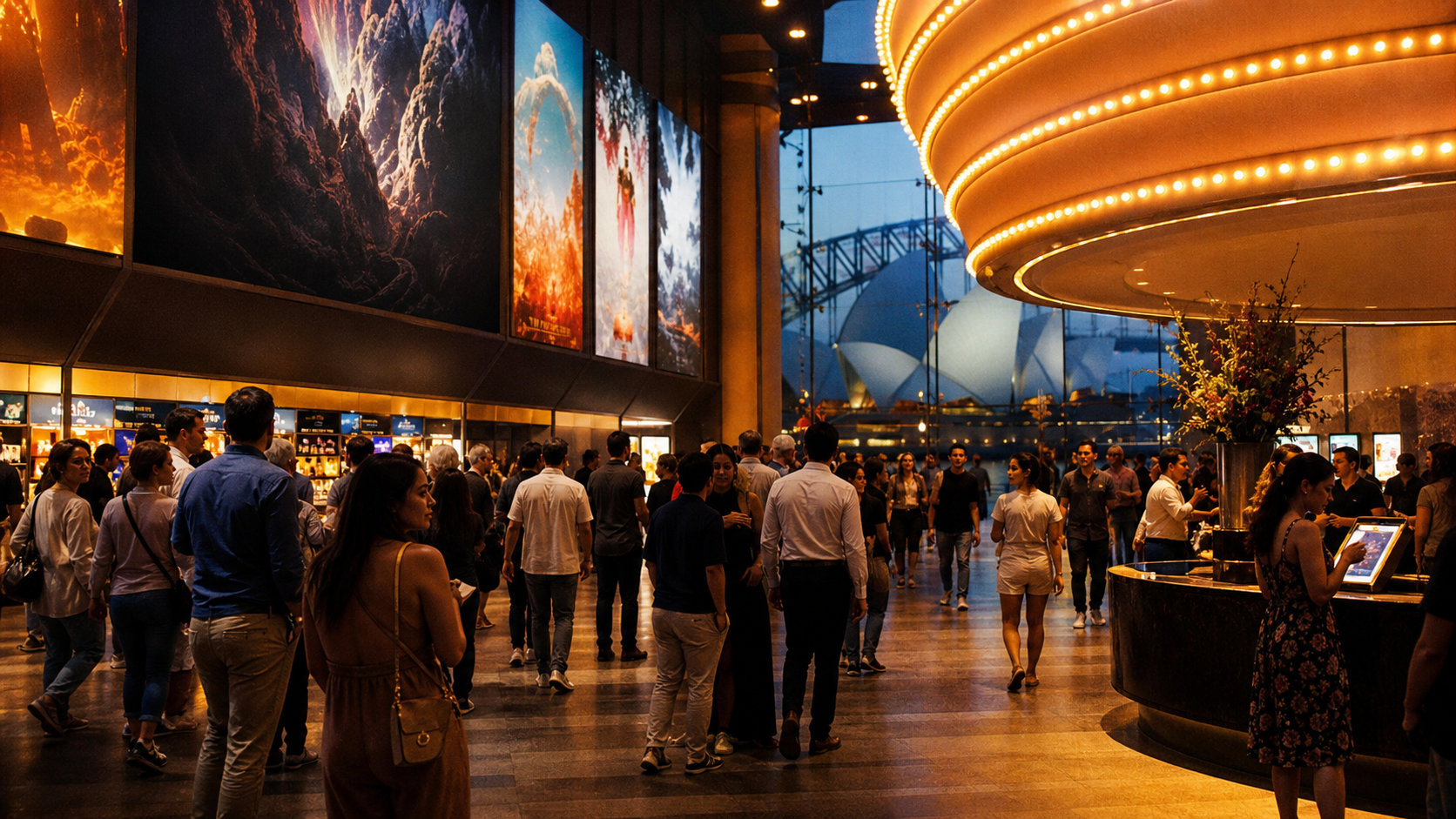
Christopher Nolan’s The Odyssey has continued its strong run at the Australian box office, holding the market’s attention after becoming the country’s biggest film of 2026. The result is more than another successful opening for a famous director. It is a reminder that audiences will still make a night of going to the cinema when a film feels large, distinctive and worth seeing on the biggest available screen.
Variety Australia reported that the film remained dominant for a second weekend. That staying power matters because modern blockbusters are often judged by how quickly they open, while cinemas depend on films that keep attracting customers after the first rush of fans. A durable run gives exhibitors more confidence, helps surrounding releases find an audience and creates repeat business for premium formats.
Why this film became an event
Nolan has built a reputation for treating theatrical presentation as part of the work rather than simply a distribution step. His films are marketed around scale, practical craft and the promise that a cinema can provide an experience difficult to reproduce in a living room. That positioning gives each release a clear identity before audiences encounter the story itself.
The Odyssey also arrives with the advantage of a familiar title and an epic framework. Viewers do not need to know every detail of Homer’s poem to understand that the story involves a dangerous journey, mythic obstacles and a hero trying to return home. The combination of cultural recognition and a filmmaker associated with spectacle makes the release easy to present as a major occasion.
For Australian cinemas, that sense of occasion is valuable. Streaming services have made a huge catalogue available at home, so a routine release has to compete with convenience. A film positioned as a visual and communal experience gives people a reason to organize a trip, choose a session and pay for a premium screen.
The business case for premium screens
Event films can lift revenue in several ways. Large-format and luxury auditoriums usually carry higher ticket prices, while longer visits can support food and beverage sales. A busy headline release also brings customers into multiplexes where they see trailers and displays for coming attractions, helping the next wave of films.
The strategy is not without limits. Cinemas cannot rely on one or two giant titles to carry an entire year, and audiences will not treat every expensive production as essential. Theatrical businesses still need a varied calendar that includes family films, local productions, comedy, horror and awards contenders. Smaller releases provide choice and can perform efficiently without blockbuster budgets.
What an outsized success does provide is evidence that the cinema habit has not disappeared. It has become more selective. Many viewers appear willing to wait for ordinary titles to reach home platforms, but they respond when marketing, reviews and word of mouth combine to say that a particular film should be seen with a crowd.
Australia’s role in the global release map
Australia is a significant English-language film market with an established exhibition network and a strong premium-screen presence. Performance there can reinforce a worldwide narrative about a release, especially when the same title is drawing attention across North America, Europe and Asia-Pacific.
Local results still have their own texture. School calendars, weather, public holidays and competition from Australian releases can influence attendance. A film that holds well for more than one weekend is therefore demonstrating more than brand awareness; it is showing that recommendations are travelling beyond the most committed opening-night audience.
That is particularly important for a long film or one with challenging material. Strong retention suggests viewers see the running time and subject matter as part of the value rather than barriers. It can also encourage cinemas to preserve premium sessions instead of quickly handing those screens to the next release.
What the industry should learn
The obvious lesson is not that every studio should make a historical epic. It is that theatrical films need a persuasive reason to be theatrical. That reason might be visual scale, live audience energy, a beloved family property, cultural relevance or the discovery of a filmmaker with a genuinely fresh voice.
Studios also benefit when they give a release enough room to develop. Constantly chasing the next opening weekend can shorten the life of films that might grow through conversation. A strong second weekend is evidence that the audience is still expanding, and exhibitors should be able to respond with sensible scheduling rather than treating every title as disposable.
For viewers, the success of The Odyssey may lead to more investment in ambitious cinema. The healthiest outcome would not be a parade of imitations, but greater confidence in films with a clear creative proposition. Audiences are demonstrating that they can distinguish between scale for its own sake and a release designed as a complete big-screen experience.
Australia’s box office is therefore telling a wider story. Home entertainment remains powerful, but it has not erased the appeal of gathering in a dark room for something that feels singular. The challenge for the industry is to make that feeling available more often, across budgets, genres and countries.