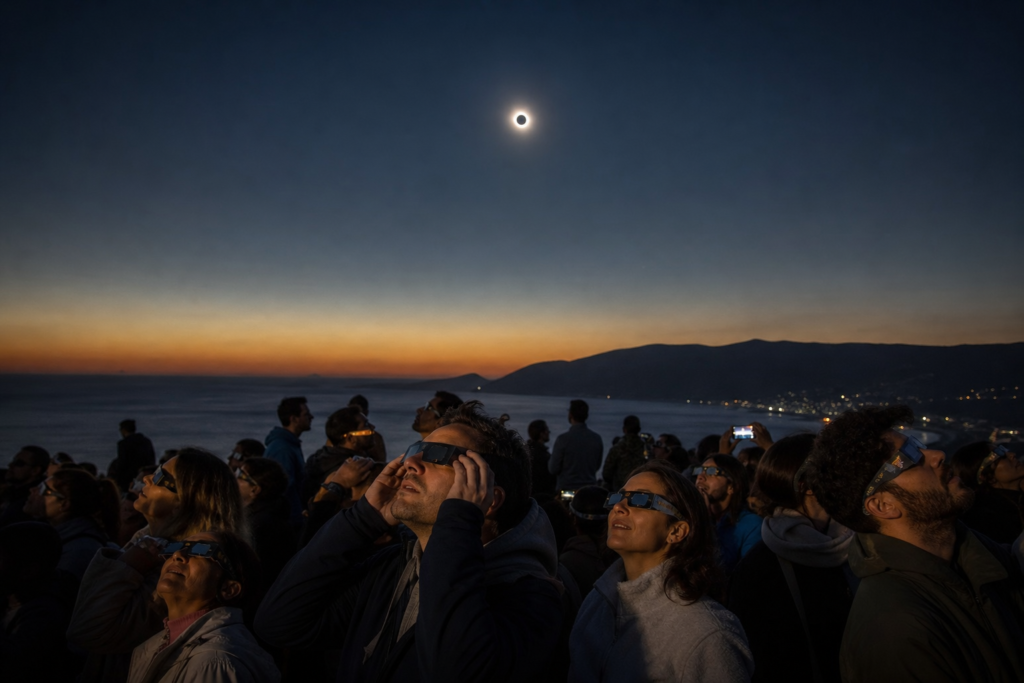
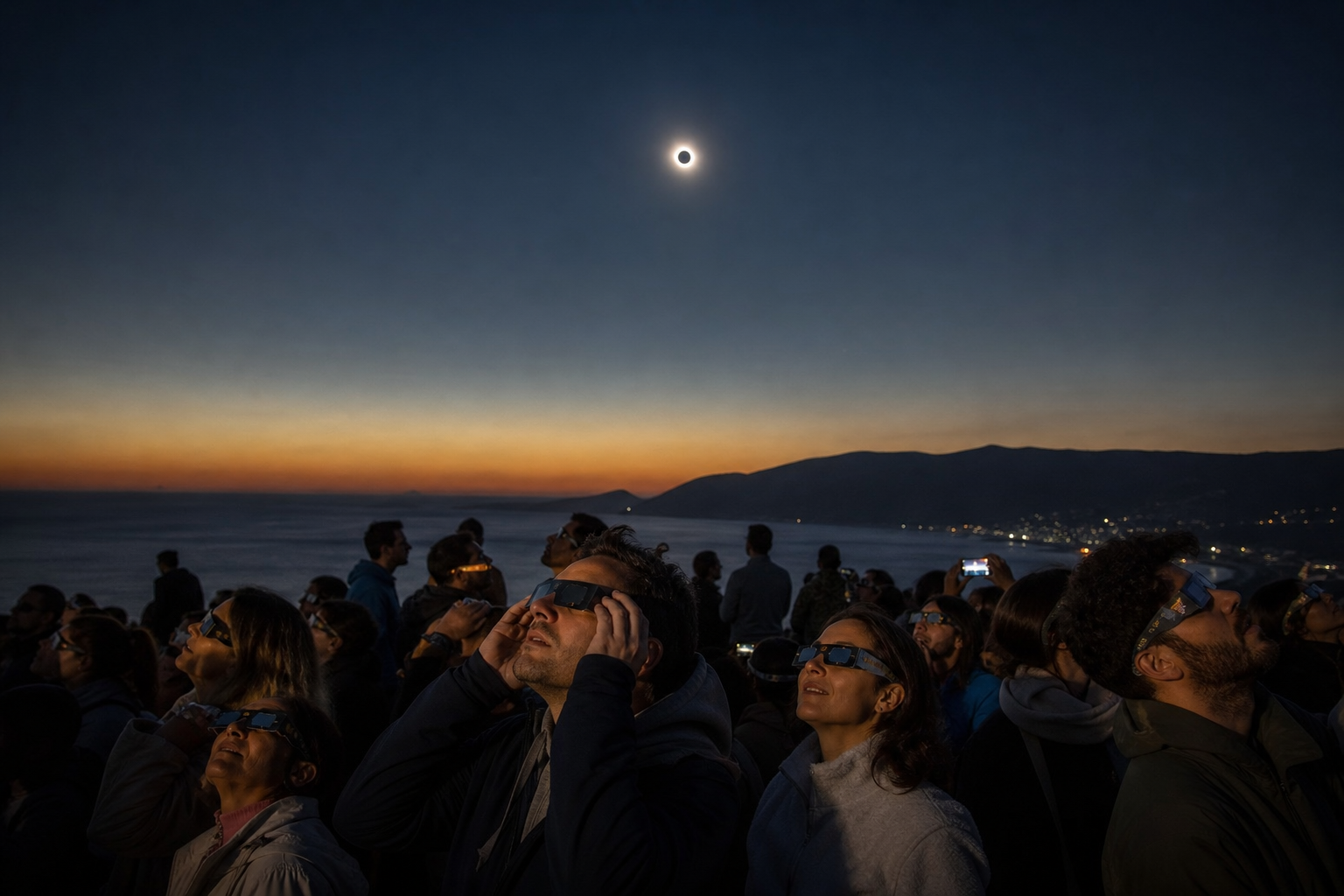
Europe is preparing for a rare total solar eclipse on August 12, with the Moon’s shadow sweeping across Greenland, Iceland, northern Spain and a small part of Portugal. The event arrives near sunset in the Iberian Peninsula, creating striking viewing conditions and unusual logistical challenges.
NASA says totality crosses the Arctic and Atlantic before reaching Spain. The Associated Press reports that daytime darkness will descend close to sunset, while scientists prepare atmospheric observations.
Why location matters
Only viewers inside the narrow path of totality will see the Sun completely covered. People across a much wider area will see a partial eclipse, which remains impressive but does not produce the same darkness or visible solar corona.
Weather may decide the experience. Cloud can hide the Sun even at an ideal geographic point, so travellers should follow local forecasts and avoid dangerous last-minute driving. Northern Spain offers many possible viewing areas, but the low Sun means hills, buildings and trees can block the horizon.
Eye safety is non-negotiable
Ordinary sunglasses are not sufficient. Certified eclipse glasses or proper solar viewers are required whenever any bright part of the Sun remains visible. Cameras and telescopes need filters mounted over the front of the lens; looking through unfiltered optics can cause immediate injury.
During the brief phase of totality, viewers inside the path may look without filters. Protection must return as soon as the Sun begins to reappear. Parents and event organisers should explain that transition before the eclipse starts.
A tourism opportunity with pressure attached
Hotels, transport operators and rural communities expect a surge of visitors. That creates spending for local businesses, but overcrowded roads, wildfire risk, waste and emergency access require careful management. Visitors should use designated sites and respect restrictions.
The eclipse also offers public science at unusual scale. Temperature can fall, winds can change and animals may respond to sudden darkness. Balloon projects and ground instruments will study the atmosphere while millions watch.
The spectacle lasts only minutes, but good planning will determine whether it becomes a memorable shared event or a preventable safety problem. The best preparation is simple: confirm the path, check the horizon and weather, obtain certified protection and arrive early.