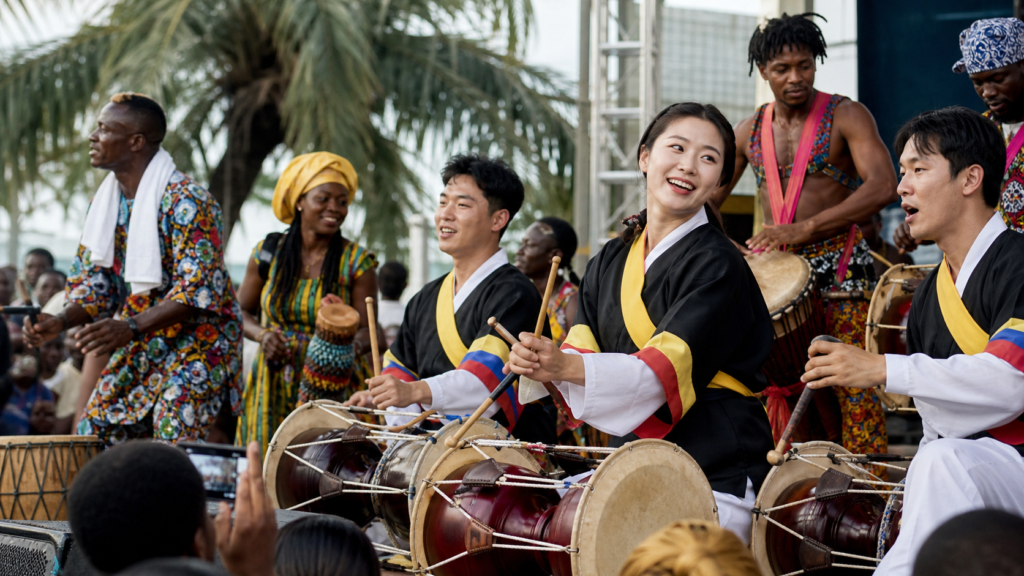
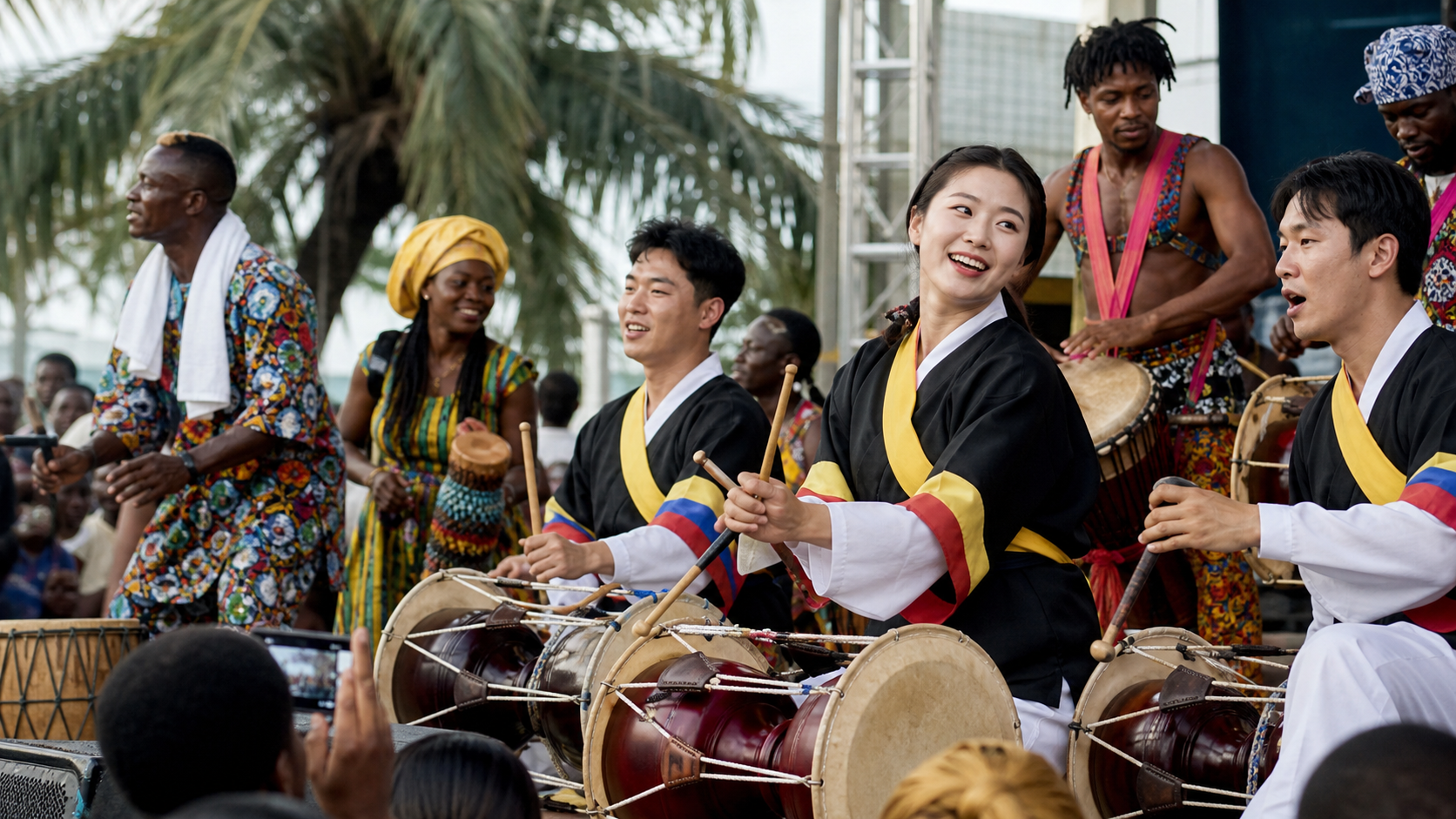
Lagos is hosting the finale of the 2026 Janggu Festival on August 22, bringing Nigerian and Korean percussion traditions together after three days of workshops, masterclasses and performances. The Guardian Nigeria reports that the programme culminates at the J. Randle Centre for Yoruba Culture and History, with competitions and ensemble performances designed to make cultural exchange something audiences can hear and participate in.
The janggu is a Korean hourglass-shaped drum with a long performance history. In Lagos, it meets a city whose musical identity is inseparable from rhythm. That makes the festival more than a visiting showcase. Nigerian percussionists bring knowledge of instruments, patterns and communal performance practices that can enter a real conversation with Korean technique. The most valuable exchange happens when artists move beyond presenting separate traditions and begin listening, adapting and creating together.
Training before spectacle
The festival’s emphasis on workshops is important. Cultural events can produce memorable photographs without leaving much behind, but structured training creates skills that continue after the stage is cleared. Sessions involving players from Surulere, Apapa, Ajegunle, Bariga, Akoka, Shomolu and the University of Lagos widen the circle beyond a small professional group. Young performers can encounter a new instrument while experienced drummers compare technique, notation, movement and ensemble discipline.
The programme builds on years of work associated with the JangguWithPapa initiative and Nigerian percussionist Isioma Williams, who trained in South Korea. That continuity matters because trust between cultural communities is rarely built through a single ceremony. It grows through repeated teaching, collaboration and the willingness to let local artists interpret a tradition rather than merely reproduce it.
Competition can widen participation
The finale includes categories for children, adult men, adult women and groups, with cash prizes. Competitions can attract attention and reward practice, but their longer-term value lies in creating visible pathways. A child who watches someone close to their age perform may see drumming as a skill worth pursuing. A group category encourages the listening and coordination that percussion ensembles demand.
The advertised programme also includes Nigerian ensembles using Duma, Ekwe and Sakara traditions, alongside a public drum circle. That balance prevents the festival from treating Nigerian music as scenery for an imported form. Instead, it frames both traditions as living practices capable of sharing a stage while retaining their identities.
Culture as practical diplomacy
Nigeria and South Korea have relationships in trade, technology and education, but cultural work reaches people who may never participate in formal diplomacy. A performance can create curiosity about language, history and everyday life. It also offers a more equal form of exchange: artists contribute expertise from both sides instead of one country simply marketing itself to another.
There is an economic dimension as well. Festivals employ technicians, designers, venue staff, teachers and performers. They can bring audiences into cultural districts and help artists build networks for touring and commissions. Lagos already has a global creative reputation; carefully developed international programmes can deepen that position without diluting local culture.
What should happen next
The strongest measure of success will come after August 22. Organisers can document new compositions, track students who continue training and support reciprocal visits for Nigerian artists. Schools and arts centres could incorporate short percussion programmes, while digital archives could preserve performances and teaching material with the artists’ consent.
The Janggu Festival demonstrates that cultural exchange works best as a practice, not a slogan. Its final drum circle offers an apt image: different people holding distinct rhythms, listening closely enough to create one shared performance. If the partnerships continue, Lagos will have hosted not just a festival but another chapter in a creative relationship between Nigeria and Korea.
Why this story travels
The appeal extends beyond festival audiences. Korea has built global interest in its contemporary culture, while Nigerian music and film continue reaching new markets. Traditional arts give that exchange historical depth. They show that international collaboration is not only about the newest hit or screen release, but also about techniques carried across generations. Artists who understand those foundations can create partnerships with more respect and originality.
For Lagos cultural institutions, the event also tests how heritage venues can serve living communities. A centre devoted to Yoruba history becomes a meeting point for Nigerian and Korean practice, demonstrating that preservation and experimentation do not have to compete. The result can be both educational and immediately enjoyable.